Rail shipments can be challenging to track and monitor. Each Class I carrier uses its own tracking system, data formats vary widely, and delays often go unreported until they disrupt your operations. Logistics teams struggle to plan supply chain, respond to customer questions, and prevent costly issues like dwell time or stalled shipments. But there’s a better way.
Rail Command consolidates rail data from every North American carrier into one platform, giving you more accurate visibility and shipment monitoring you need to keep freight moving, reduce surprises, and improve operational efficiency.
Is a Lack of Rail Shipment Visibility Disrupting Your Operations?
Many shippers continue to face serious visibility gaps across their rail networks. Even simple tracking tasks can eat up valuable time with data scattered across multiple railroad tools, feeds, and internal systems. These information silos mean status updates are often delayed or incomplete, leaving teams reactive instead of proactive. Without accurate ETAs, planners can’t schedule labor, equipment, or supply chains efficiently.

A lack of rail shipment visibility means:
- Siloed shipment data across multiple railroads
- Slow or outdated status updates
- Lack of clear ETAs or transit-time predictions
- Difficulty monitoring delayed or off-route railcars
- Limited visibility for private fleets and empty equipment
- No centralized view for operations, logistics, and management teams
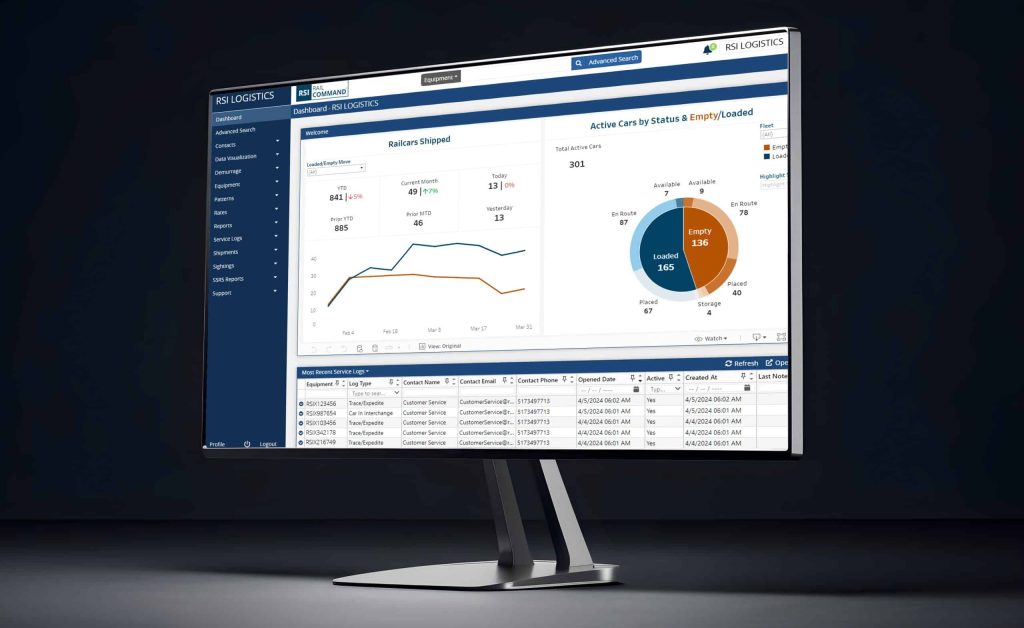
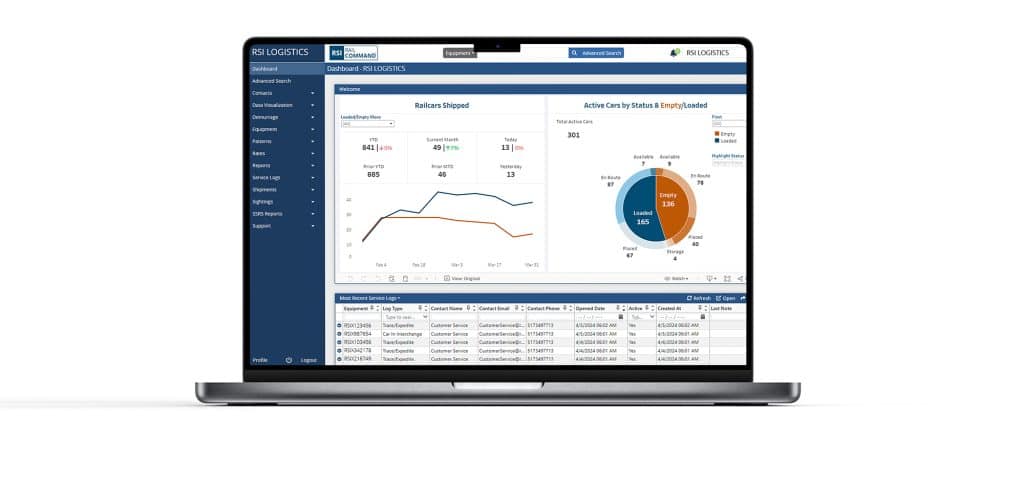
Rail Command brings all of this information together, giving your team complete rail shipment monitoring and visibility in an intuitive dashboard. With no more data silos and easy access to the information you need, you’ll be able to make logistics decisions with agility and confidence.
A Single Platform Tracking All Your Rail Shipments
Rail Command unifies movement data from all Class I North American carriers, making it easy to monitor private and railroad-owned cars in one centralized dashboard.Instead of jumping from system to system to monitor railcar movements, Rail Command provides comprehensive location and data reporting built from your supply chain. You’ll also get access to accurate, enhanced ETAs, removing the variability and guesswork behind different lanes, seasons, or carrier performance.

Rail Command gives you:
Enhanced ETAs: Whether shipping or receiving, track railcars throughout North America via a continuously updated CLM feed.
Full-scale visibility to: Reduce operational surprises, eliminate guesswork from logistics decisions, prevent delays and bottlenecks, increase fleet velocity and asset utilization
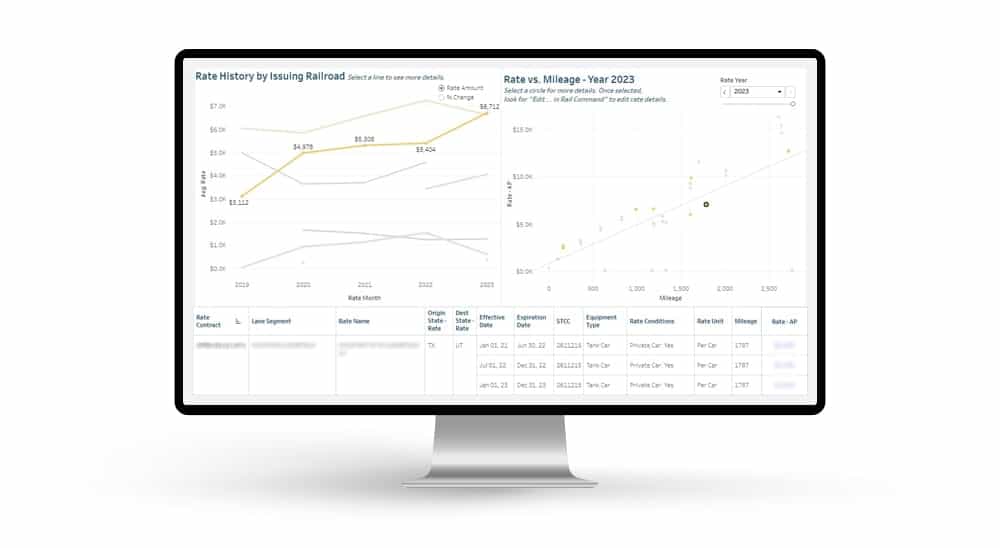
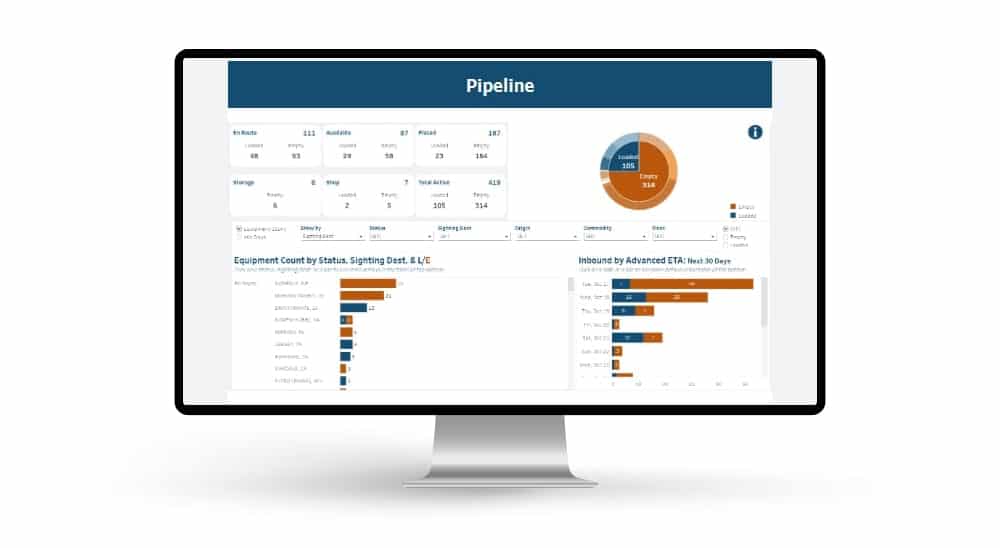
Rail Command: Comes standard with data visualization KPI reporting and a grid view custom report builder.
Access to movement data: for all Class I North American carriers
This comprehensive view gives your team the confidence to plan ahead, respond quickly, and maintain smooth operations across your entire network.
How Rail Shipment Visibility Reduces Costs
When you know exactly where your railcars are and what’s happening with every shipment, you can operate more efficiently across your entire supply chain. Improved visibility doesn’t just help you operate better, it helps you save money.
With Rail Command, you can:
- Reduce dwell time
- Reduce demurrage and accessorial fees
- Improve cycle times for fleets
- Correct out-of-route railcars
Take Control of Your Rail Visibility
Move beyond standard visibility and monitoring. Our GPS-enabled visibility combines location, geofence, and car conditions with our Rail Transportation Management System, helping you manage your supply chain more efficiently and effectively.
Pair Rail Command® with Our Managed Services
Pair the power of Rail Command® with RSI’s experienced professionals. From daily tracking and fleet management to securing you the best rail rates, our team and software combine for a full service rail logistics solution.
Don’t Have Time to Monitor Every Asset?
We Can Help.
Keeping up with fleet’s worth of railcar events, ETAs, exceptions, and carrier updates is more than most shipping teams can manage alone. RSI Logistics’ rail supply chain experts act as an extension of your team—monitoring your shipments, identifying risks before they become delays, and coordinating directly with carriers to keep your freight moving.
Our Managed Rail Shipment Monitoring Services Include:
- Exception Management: Work with rail carrier(s) to facilitate movement of problematic railcars.
- Full Service: Proactively track and trace railcars to identify potentially jeopardized shipments and work with rail carrier(s) to facilitate movement.
- On Demand: As requested, investigate railcars to resolve outstanding issues.
- Diversions: Submit and track railcar diversions.
With RSI’s managed services, you get all the benefits of advanced rail shipment visibility while saving time and energy. Our team keeps watch so yours can focus on higher-value operations.
FAQs About Rail Shipment Monitoring & Visibility
Rail shipment visibility is the ability to track and monitor railcars and shipments accurately, across multiple carriers, in one place, including status updates, ETAs, and exceptions.
It includes knowing where each car is, when it is expected to arrive, and whether it is moving as planned.
Rail visibility is challenging for several reasons, including fragmented carrier data, individual tracking system and event codes for each carrier, low data quality, wide network areas reducing visibility, or events that don’t clearly or consistently reach across different services. In addition, most shippers use spreadsheets or manual tracking, which makes it easy for shipments to fall through the cracks.
Railcar tracking typically comes from carrier EDI messages such as CLMs (Car Location Messages) or key events like arrivals, placements, or delays. To track railcars in real time, shippers typically use rail carrier websites or portals, pull waybill and event data directly from carriers, or adopt railcar tracking or rail TMS software that consolidates all carrier data. They might also set up alerts for exceptions, stalled cars, or routing issues.
A variety of tools can help rail shippers gain easier access, such as Rail carrier tracking portals (BNSF, UP, CSX, CN, CP, etc.) or railcar tracking platforms that display all shipments in one dashboard. However, a rail Transportation Management System (TMS) specifically designed for rail, like Rail Command, can give you full data visibility with no need to access and cross-reference different data sources. A high-quality rail TMS will also give you tools to monitor stalled or delayed railcars and analytics dashboards for dwell time, lanes, cycle times, and ETA performance.
Not always, but a rail TMS can significantly improve comprehensive access if you manage a medium or large fleet, ship across several Class I or short line carriers, or need reliable ETAs or exceptions. If you find yourself spending too much time manually checking carrier portals or struggling with missing or unclear event data, a rail TMS can greatly reduce manual effort and gain easier access for most shippers.
Common causes for rail shipment delays include congestion in yards, interchange delays between carriers, equipment shortages, weather-related disruptions, mechanical inspections, and misroutes. Understanding root causes helps shippers improve planning and reduce unexpected dwell.
ETA accuracy varies by carrier and lane, and it can be affected by weather, congestion, or unexpected dwell. Tools that aggregate and analyze carrier data can provide more reliable ETAs by identifying when actual progress is deviating from carrier-projected timelines.